Shopping Cart

Activities

WMA 3 days (Group)

Level: 1-2-3
Season: Winter
Duration: 3 days
Participants: 6

My goal

WMA – Winter Mountain Access is a three-day experience designed for those who want to go beyond simply discovering the winter mountains and begin to understand how decisions are made on the ground.

Each morning, together with your IFMGA Mountain Guide, you will assess the snow, weather, visibility and terrain. From this comes the choice of the most suitable area and activity. The programme does not follow a fixed itinerary: it develops day by day according to the actual conditions and what the group is learning.

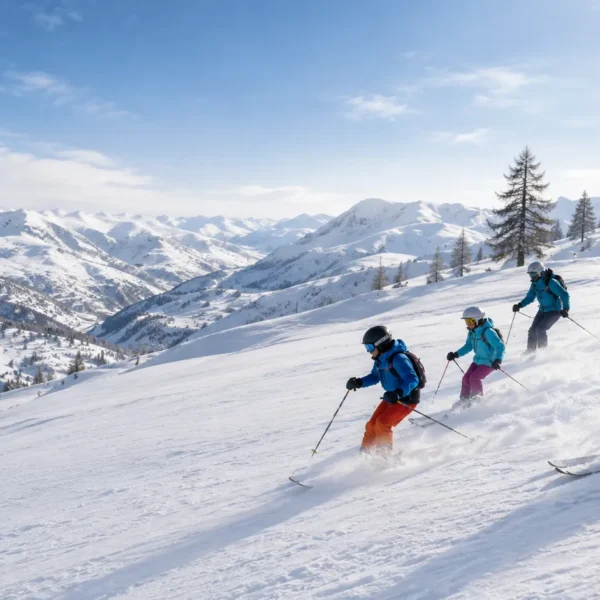
Skiing remains the priority. When conditions allow, we may go freeriding, ski touring, explore a different valley of Monte Rosa or work on specific technical skills. If the snow does not offer a worthwhile ski day, we change activity: avalanche rescue practice, snowshoeing, crampon skills, ice or rock.

The same guide stays with the group for all three days. This continuity allows the guide to understand each participant’s ability, pace and expectations, explore different types of terrain and build each day on what emerged during the previous one.

You will not be expected to make decisions on your own: responsibility for safety and the final decision always remains with the guide. But you will not simply follow. You will learn to notice what the guide is observing, understand the options being considered and see why, in certain conditions, one route or activity makes more sense than another.

The goal is not to complete a fixed programme, but to return home with more tools to read the winter mountain, greater awareness and a clearer understanding of how a local professional makes decisions.

€420 per person

The price includes

  • Local IFMGA Mountain Guide for three days
  • Safety kit: avalanche transceiver, shovel and probe
  • Snowshoes, crampons and harness when required
  • ABS avalanche backpack when required

Not included

  • Ski pass
  • Skiing or technical equipment not listed above
  • Equipment rental, when necessary
  • Meals and drinks
  • Accident and cancellation insurance

Day 0 – Understanding your starting point

Before the experience, we arrange a short call with your Mountain Guide. You will discuss your previous experience, skiing ability, physical preparation, expectations and the equipment you already have. The Guide will explain the expected conditions and the different possibilities the mountain may offer. The programme remains open and will be confirmed according to the actual conditions. If you are already in Alagna and would prefer to meet in person, we can have the briefing over an aperitivo instead.

Day 1 – Observing the mountain

You will meet your Guide at 8:00 am at the Alagna cable car station or at 9:00 am at Passo dei Salati. The meeting point will be confirmed before the activity. The day begins with an equipment check and an assessment of the group’s abilities. Together, you will observe the weather, snow and terrain before choosing the most suitable activity. The Guide will explain what they are looking at and how these observations influence the day’s decisions. The first objective is to understand the group, establish a shared pace and begin connecting conditions with terrain choices.

Day 2 – Exploring more terrain and developing skills

The second day builds on what the Guide learned about the group and what you experienced on Day 1. You may explore a different area, move into more varied terrain or introduce new skills. Depending on the conditions, the day could include freeriding, ski touring, short ascents with skins, route-finding or practical avalanche-safety work. The Guide will involve you more actively in reading the terrain and comparing the available options. You will begin to understand not only where you are going, but why that choice makes sense.

Day 3 – Making better decisions

By the third day, the Guide knows the group and can propose a more complete objective suited to the conditions and the progress made during the previous days. Before setting out, you will review the weather, snow and possible routes together. You will be encouraged to recognise the most important factors and discuss the alternatives, while the Guide retains responsibility for the final decision and safety. The goal may be a longer descent, a ski-touring itinerary, a more technical day or a completely different winter activity. What matters is that the choice is coherent with the real mountain.

This final day brings the WMA approach together: observe, understand, choose and adapt.

Bring your skis and any mountain equipment you already have. During the briefing, we will choose the activity best suited to the conditions and check exactly what you will need for the day.

We can provide:

  • snowshoes;
  • a climbing harness;
  • crampons;
  • an avalanche safety kit with transceiver, shovel and probe;
  • an ABS avalanche airbag backpack when required for the activity.

If the chosen activity requires equipment that you do not own and we cannot provide, it will need to be hired. We will check what is missing with you and help arrange the rental.

Mountaineering, ski touring, off-piste skiing and trekking take place in a natural, uncontrolled environment.
Weather conditions, snow, ice, terrain, visibility, altitude and physical fatigue can change rapidly and directly affect the course of the activity. For this reason, there is always an inherent level of objective risk, which cannot be eliminated but only managed.

All our activities are led by IFMGA Mountain Guides and Certified Hiking Guides (AMM).
The guide continuously assesses environmental conditions and the physical and mental state of participants, sets an appropriate pace, manages progression and ensures the correct use of equipment. If conditions require it, the guide may modify the itinerary or interrupt the activity, always in the interest of individual and group safety.

Participants are required to be in good physical and mental condition, adequately prepared for the level of the activity, and to follow the guide’s instructions at all times.

Group activities

During group outings, the pace is set according to the slowest participant. In case of fatigue or discomfort, the guide may decide to adjust the programme or return early. In the mountains, the group ascends and returns together.

Learn more here

FAQ #1 – Is WMA Explore suitable for my level?
WMA Explore can be adapted to different technical levels, but participants need compatible abilities. If skiing is part of the programme, you should be confident on red runs and able to control your speed and line on ungroomed snow. Before confirming your place, we will ask about your previous experience so we can assess your level and place you in a suitable group.
FAQ #2 – What is the difference between WMA Discover and WMA Explore?
WMA Discover is a two-day introduction to the WMA approach. WMA Explore lasts three days, giving the same IFMGA Mountain Guide more time to get to know the group, explore different terrain and involve you more actively in reading the conditions and understanding why one route or activity may make more sense than another.
FAQ #3 – Is the programme fixed in advance?
No. Each day your IFMGA Mountain Guide assesses the snow, weather, terrain and the group’s level, then chooses what makes the most sense. The programme may include freeride, ski touring, avalanche rescue practice, snowshoeing, crampon skills, ice or rock. If the conditions change, the programme changes too.
FAQ #4 – What happens if the conditions are not suitable for skiing?
Skiing remains the priority, but we do not force it. If the snow, weather or safety conditions do not offer a good ski day, the guide may move to another area or choose a different activity that makes sense in the conditions. This is one of the principles of WMA: use the day the mountain gives you.
FAQ #5 – Will I learn how decisions are made in the mountains?
Yes. You will gradually be involved in reading the conditions and understanding the guide’s choices. The guide will explain what they are observing, which options are being considered and why one route or activity may be preferable to another. Responsibility for safety and the final decision always remains with the IFMGA Mountain Guide.
FAQ #6 – What equipment should I bring?
Bring your skis and any winter mountain equipment you already own. During the briefing, we will check what is needed for the activities planned. We can provide an avalanche safety kit with transceiver, shovel and probe, snowshoes, crampons, a harness and, when required, an ABS avalanche airbag backpack. Any other equipment not included will need to be rented if necessary.

Populate the form and secure your spot now!
Choose your departure date

WMA 3 days (Group)

€0.00


Category:

Insurance

Before departure, check that your insurance policy specifically covers mountaineering, glacier travel, altitude, trip cancellation, repatriation, and personal liability. For more information, read our complete guide to mountain insurance.

WINTER

Level 1 – Explore
First freeride experiences. Controlled turns and a relaxed pace on accessible terrain.

Level 2 – Advanced
Confident skiing on ungroomed snow and able to maintain a good pace throughout the day.

Level 3 – Technical
Regular freeride experience, including on steeper terrain and in more exposed situations.


SUMMER

Level 1 – First experience
You should be comfortable with normal mountain hiking. No previous mountaineering or glacier experience is required.

Level 2 – Basic experience
You should already have completed hikes of several hours on mountain trails. Previous glacier experience or use of crampons is not required, but you should be ready to use them for the first time.

Level 3 – Mountaineering experience
Previous experience using crampons and travelling roped together on a glacier is required. The route may include short exposed sections.

Level 4 – Advanced experience
Solid experience using crampons and travelling roped together is required. The route may include exposed ridges, steep slopes and mixed terrain.

Level 5 – Experienced mountaineer
Strong experience on technical high-mountain routes is required. The route may include very exposed sections, climbing on rock, ice or mixed terrain, and may require knowledge of the main rope techniques.

The level indicates the technical experience required, not the physical effort.
The actual difficulty may vary depending on mountain conditions and the route.